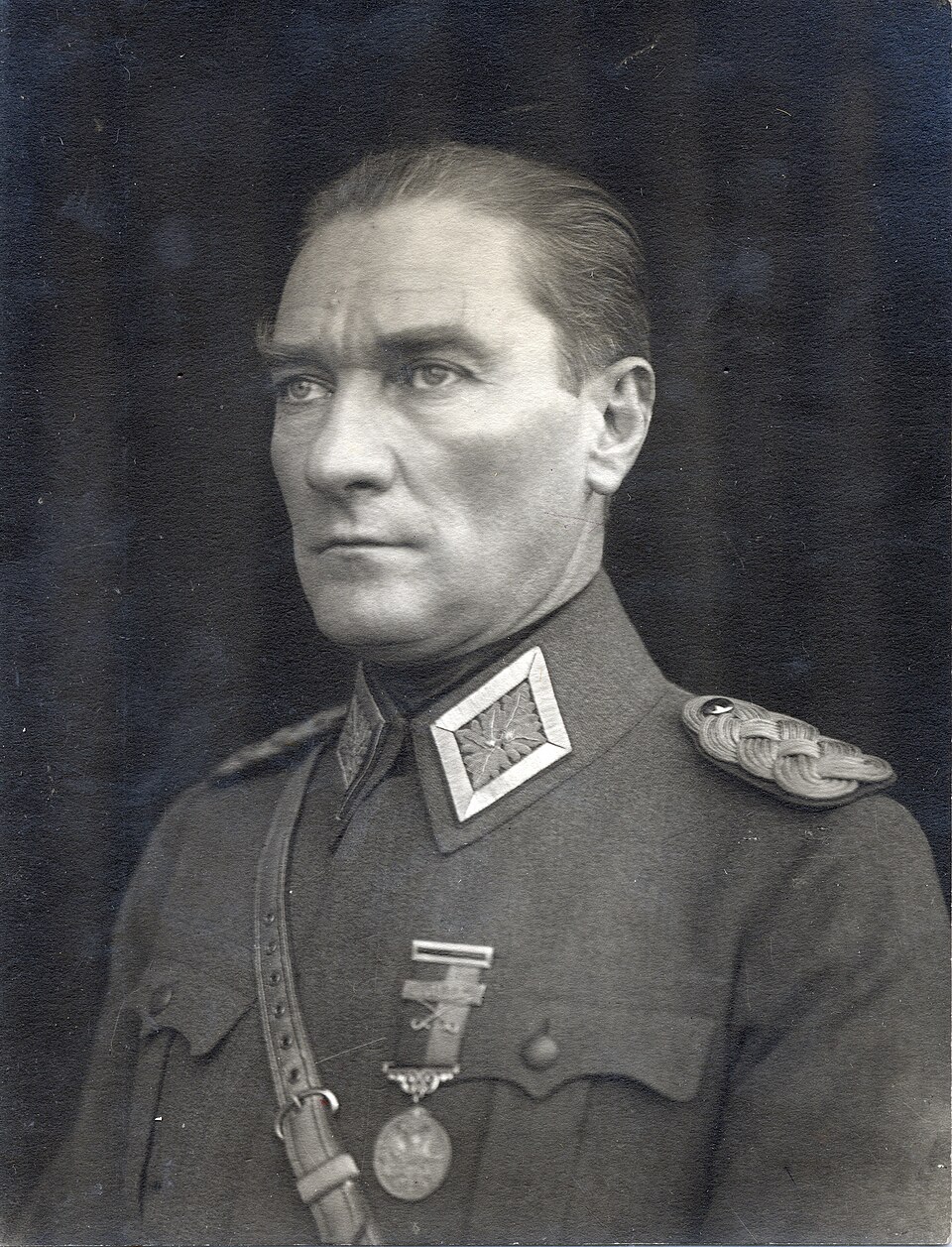
Atatürk on Women: Exploring the Elusive Sayings in Digital Archives
Mustafa Kemal Atatürk, the founder of the Turkish Republic, is celebrated worldwide as a visionary leader whose reforms fundamentally transformed a nation. His revolutionary zeal extended to every aspect of society, perhaps most notably to the status of women. In an era when many Western nations still grappled with gender inequality, Atatürk championed radical changes, granting women rights far ahead of their time. Yet, when embarking on a digital quest for specific, easily attributable Atatürk Kadın Sözleri (Atatürk's sayings on women), researchers often encounter a fascinating challenge: pinpointing definitive, widely circulated quotes can sometimes feel like searching for a needle in a digital haystack, particularly within specific archival datasets.
This article delves into the exploration of Atatürk's views on women, examining why direct, isolated "sayings" might seem elusive in certain digital contexts, and how his profound legacy is more accurately understood through his actions, reforms, and the broader philosophical framework he established. Our journey seeks to connect the dots between the historical record, the aspirations of digital researchers, and the enduring impact of a leader who believed unequivocally in the equal standing of women in a modern society.
The Quest for Atatürk Kadın Sözleri in Digital Archives
In today's interconnected world, the first instinct for many researchers or curious minds is to turn to digital archives. Scholarly repositories, digitized speeches, and comprehensive collections of historical documents offer unprecedented access to primary sources. However, as some research experiences reveal, a targeted search for specific Atatürk Kadın Sözleri across certain digital platforms may not always yield an abundance of direct, explicit quotes in the manner one might expect. This isn't necessarily a reflection of a lack of interest or statements from Atatürk on the topic, but rather highlights the complexities of digital archiving, keyword indexing, and the nature of historical discourse itself.
Often, Atatürk's views on women are embedded within longer speeches, policy documents, or philosophical treatises. They are part of a larger narrative of nation-building and modernization, rather than standalone aphorisms readily separated for quick consumption. For instance, while a collection of Atatürk's complete works might meticulously compile every speech and writing, extracting specific, easily quotable lines without deep contextual reading can be challenging. This underscores the need for comprehensive historical inquiry that goes beyond simple keyword searches, urging us to explore the full breadth of his thought, rather than merely isolated fragments. Understanding the full scope of his vision requires immersing oneself in the period's extensive documentation. If you're interested in the deeper textual analysis, you might find value in Uncovering Atatürk's Quotes on Women: A Contextual Analysis.
- Tip for Digital Researchers: When searching for historical figures' views, move beyond direct keyword matches. Explore entire speech transcripts, legislative debates, and biographic accounts. Look for policy changes and educational reforms as proxies for underlying philosophical statements.
- Insight: The absence of easily digestible quotes in specific datasets does not equate to the absence of the topic in Atatürk's overall philosophy or actions. Instead, it prompts a more thorough and holistic research approach.
Atatürk's Vision for Women: Beyond Direct Quotes, Through Revolutionary Actions
While specific Atatürk Kadın Sözleri might require careful excavation from vast archives, Atatürk's commitment to women's rights is undeniably evident in his transformative reforms and foundational principles. His vision for a modern Turkey was inextricably linked to the empowerment and emancipation of women, making him a pioneer in gender equality on the global stage. These actions, arguably, speak louder than any singular quote:
- Education for All: One of Atatürk's most pivotal reforms was the unification of education and the opening of schools to girls at all levels, including universities. He believed that an educated populace, inclusive of women, was fundamental to national progress. This wasn't merely a statement; it was a nationwide policy implemented with unwavering resolve.
- Legal Equality: The adoption of the Turkish Civil Code in 1926, replacing religious law (Sharia), was a monumental step. It granted women equal rights in marriage, divorce, inheritance, and custody, effectively dismantling centuries of patriarchal legal structures. This act was a concrete manifestation of his belief in women's individual autonomy and legal parity.
- Political Participation: Turkey granted women the right to vote in local elections in 1930 and full suffrage (the right to vote and be elected to parliament) in 1934. This made Turkey one of the first countries in the world to extend these rights, placing it ahead of many Western democracies. Atatürk actively championed and oversaw these legislative changes, demonstrating his belief in women's integral role in political life.
- Professional and Public Life: Atatürk actively encouraged women to enter various professions previously dominated by men, from law and medicine to teaching and civil service. He often appeared in public with modern, unveiled Turkish women, setting an example for the new societal norms he envisioned.
These actions paint a vivid picture of a leader whose philosophy embraced gender equality not as an abstract ideal, but as a practical necessity for national development. The spirit of his "sayings" is therefore embodied in the very fabric of the Turkish Republic's foundational principles concerning women's rights.
Context is Key: Interpreting Historical Statements on Women
When searching for or interpreting historical statements, especially those concerning social issues like gender roles, understanding the context is paramount. Atatürk's era (late Ottoman Empire to early Turkish Republic, roughly 1881-1938) was a period of immense global change and intellectual ferment. His reforms, while radical, were also products of their time, influenced by Enlightenment ideals, Westernization movements, and the specific socio-political challenges faced by a nascent nation. Therefore, any identified Atatürk Kadın Sözleri must be read through this lens.
For instance, while his language might sometimes reflect the paternalistic rhetorical styles common to leaders of the early 20th century, the *substance* of his policies consistently pushed for progressive outcomes. It's crucial to avoid anachronistic interpretations, judging historical figures solely by contemporary standards. Instead, we should assess them against the backdrop of their own times, recognizing the monumental leap forward Atatürk's reforms represented for women in Turkey and beyond. The nuance of his messages, often delivered to a populace undergoing rapid change, required careful crafting and strategic communication.
This contextual understanding is vital for anyone wishing to truly grasp the depth and breadth of Atatürk's commitment to gender equality. For a more detailed dive into this aspect, consider reading Uncovering Atatürk's Quotes on Women: A Contextual Analysis.
- Practical Tip: When evaluating historical quotes, always consider:
- The historical period and prevailing social norms.
- The audience to whom the statement was addressed.
- The broader policy or philosophical framework it supported.
- The actual outcomes and reforms that followed.
- Insight: Atatürk's forward-thinking approach to women's rights, especially when compared to global contemporaries, highlights his exceptional vision, irrespective of the precise phrasing of individual "sayings."
The Enduring Legacy of Atatürk's Stance on Women
The legacy of Atatürk's progressive policies on women's rights continues to shape Turkish society to this day. His reforms laid the groundwork for a secular, egalitarian society where women are constitutionally recognized as equal citizens. This foundational commitment remains a cornerstone of modern Turkey, despite ongoing debates and challenges regarding gender equality in practice.
His emphasis on education, professional advancement, and political participation for women created opportunities that were unprecedented for generations. Turkish women became doctors, lawyers, engineers, and even parliamentarians at a time when many of their counterparts in more "developed" nations were still fighting for basic rights. The spirit of Atatürk Kadın Sözleri, even if sometimes expressed more through action than through easily shareable soundbites, lives on in the institutions he created and the principles he enshrined.
Researchers and citizens alike continue to explore his complete works, his speeches, and the historical records to further understand the nuances of his views. The search for explicit quotes is often driven by a desire to distill complex ideas into accessible forms, but the true essence of his legacy lies in the comprehensive societal transformation he engineered. For those interested in the continuous effort to document and analyze these historical statements, The Search for Atatürk Kadın Sözleri: What Our Sources Reveal offers further perspectives.
Conclusion
The quest for direct Atatürk Kadın Sözleri in digital archives reveals an intriguing aspect of historical research: sometimes, the most profound messages are not found in isolated quotes but are woven into the fabric of a leader's entire body of work, actions, and the lasting reforms they enact. Atatürk's vision for women was not merely a collection of progressive statements; it was a comprehensive societal project that empowered women through education, legal equality, and political participation. His reforms were revolutionary for their time, establishing a foundational legacy that continues to influence Turkey.
By moving beyond a mere search for individual quotes and embracing a holistic understanding of his era, his policies, and their impact, we gain a much richer and more accurate appreciation of Atatürk's enduring commitment to gender equality. His actions stand as powerful testaments to his belief in women's pivotal role in the development and future of a modern nation, making him a true pioneer in the global narrative of women's emancipation.